
The truths that will save you time, money, and your sanity.
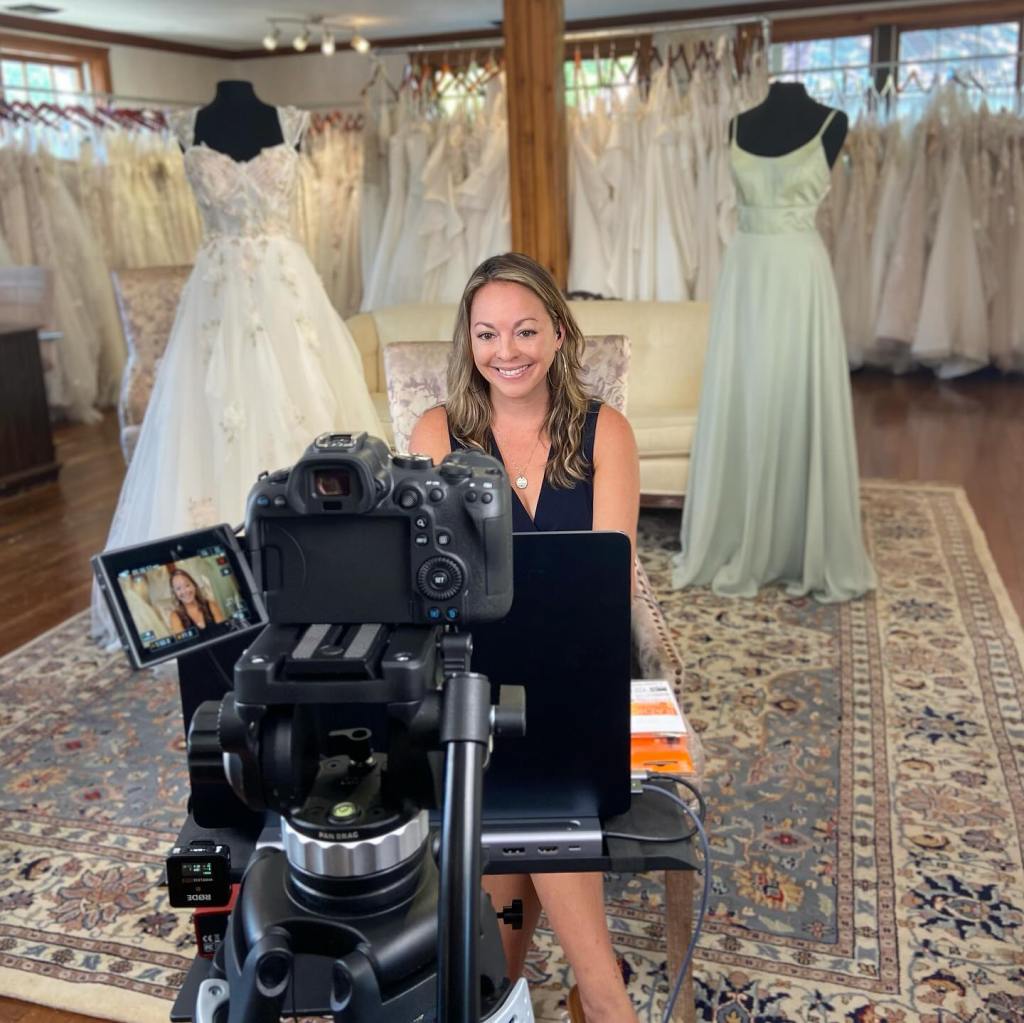
If you missed Part 1, go back and check it out. This series started with the conversations about love, boundaries, and what weddings are really about underneath all the planning. Part 2 is where we get into the stuff that will save you time, money, and your sanity.
I’ve spent years behind the mic talking to planners, chefs, photographers, designers, attorneys, and couples who had a lot to say and share. When you really listen, patterns emerge. The same advice comes up again and again, from different voices across this industry. These are the ones worth writing down.
The Structure of American Weddings Isn’t Working
Planner Nora Culley Tuck had a hot take that stopped me mid-conversation. “American weddings are wrong,” she said. “The structure of American weddings is wrong. Trying to squeeze everything into one day is stressful, chaotic, and exhausting for the couple and for their guests.”
She’s not wrong.
Nora made the case for two-day weddings, and the more she talked, the harder it was to argue with her. She described a wedding she planned across three days: a ceremony and intimate dinner on Friday, a photo shoot, banging reception, and after party on Saturday, and a casual coffee send-off on Sunday. The couple had the best time. The pressure lifted. They got multiple outfit changes, hours of portraits, and actual time with their guests.
“People are already doing it,” she said. “We just pretend it doesn’t exist.”
She’s right about that too. You already have a rehearsal and rehearsal dinner. You already do day-after brunches. You’re essentially doing a multi-day wedding. You’re just not putting any intention into the extra days.
And it doesn’t have to cost more. Nora walked through the math: photographers often offer full-weekend packages, you need fewer hours each day, you might not need a second shooter, and transportation costs go down because events are shorter. Guest lists can flex too. Your older guests who care about the ceremony and a beautiful dinner don’t need to be at the after party. Your friends who want the party don’t need to be at the intimate ceremony. “You might have 150 each day instead of 200 both days,” she said.
It also gives you room for creativity. When you’re not trying to fit every single moment into 15 hours, you can take risks. Funky florals for the after party. A restaurant for Friday dinner instead of a traditional venue. Details instead of just big wow moments.
Photographer Natalia Zuk, who shoots Polish and Ukrainian weddings, said multi-day celebrations are simply the norm in those traditions. Her own wedding in Poland went until 4am and picked back up Sunday at noon for a casual all-day hang. As Natalia put it, Saturday is so packed with traditions, dancing, and noise that you can’t actually talk to people. Sunday is when you finally can.
We’re not reinventing the wheel. We’re just finally paying attention to what the rest of the world figured out a long time ago.
Stick With the Season
Chef Dante Boccuzzi and event manager Stephanie Petras from Dante’s restaurant put it simply: your menu and your flowers should work with your season, not against it.
“Your asparagus in spring is going to be much more affordable than asparagus in November,” Stephanie said.
“And not as good either,” Dante added.
That’s the two-for-one right there. Seasonal choices cost less and taste better. Out-of-season produce is more expensive and travels farther. The same logic applies to flowers. Fighting for peonies in November is going to cost you, and they won’t look as alive as they would in May.
Sticking with the season also makes your wedding feel rooted in the time and place where you said “I do.” Those choices become a sensory memory of the day. And as a bonus, it’s one of the easiest ways to be sustainable without making it a whole production. Less waste, smaller footprint, better food. Nobody loses.
Stationery Sets the Stage
When I planned my own wedding, I didn’t give stationery a second thought. People just throw invites away, right?
After countless conversations with designers and stationers, I’ve completely changed my mind.
Farhan, owner of Wedding Erah, said it best: “If the wedding is the movie, the stationery is the trailer.” Your invitations are the first impression guests get. They tell your people what kind of party they’re walking into before they even show up.
A sleek acrylic invite says modern and chic. Handmade paper with calligraphy whispers romantic and timeless. It’s not about spending a fortune. It’s about choosing details that reflect your vibe. And those flat lays your photographer takes of your invitation suite? They become part of your wedding story, woven into your album forever.
Stationery doesn’t just carry information. It sets a tone. Don’t skip it.
Your Guest List Is Your Budget
Jessica Bishop, founder of The Budget Savvy Bride, said something in our conversation that every engaged couple needs to hear before they book a single vendor.
“So much of it comes back to your guest list. That’s truly one of the biggest factors in how much your wedding is going to cost.”
That’s it. That’s the whole thing. Every person you add to your guest list increases your catering cost, your venue size requirement, your invitation count, your favor count, your table count, your floral count. The guest list isn’t just a list. It’s your budget multiplier.
Here’s a gut check Jessica swears by: if you wouldn’t take that person out to a nice dinner and pick up the tab, should they really be on your guest list? Because that’s essentially what you’re doing. Every seat at your wedding is a seat at an expensive dinner you’re hosting. Be intentional about who’s at the table.
Your guest list is the single most powerful budget lever you have. Use it intentionally.
Timelines Are Vital
Planner Janice Carnevale said something I’ve never forgotten: “Your vendor has an end time, babe.”
No matter how relaxed you want the day to feel, you still need a timeline. Food won’t stay warm forever. Photographers can’t work without light. Bands and DJs don’t play into the night just because you lost track of time. Without a timeline, the whole flow of the day can unravel, and nothing kills a vibe faster than cold dinners, rushed photos, or bored guests.
A great timeline doesn’t box you in. It buys you breathing room to actually enjoy your day. Want to linger on the dance floor, sneak away for golden hour photos, or take your time at the dessert table? You can, because the important stuff has already been built in.
Low-key and timeline are not opposites. Build the timeline. Then relax into it.
Don’t Skip the Videographer
If there’s one regret I hear over and over, it’s this: not hiring a videographer.
Photos are essential. But video captures something photos can’t. The laughter. The sound of your vows. The way your person’s face changed when they saw you for the first time. You doing the Cupid Shuffle with your grandma at 10pm.
When the day is over, the food is gone, the flowers have wilted, and the dress is packed away, video is what brings it all back. You don’t know how much you’ll want to hear those voices again until years later when you do.
No one has ever said “I regret having a wedding video.” Plenty have said the opposite. If you can make room in the budget, make room for this.
Everything Comes Back Around
If you’ve been paying attention long enough, you know wedding trends work exactly like fashion: everything eventually comes back around. The Basque waist. Nineties minimalism. Sleek satin slips, clean silhouettes, gloves as accessories. Designers constantly pull from the past and give it a new twist.
And you don’t always have to buy new to get the look. Shopping vintage or secondhand isn’t just budget-friendly. It’s stylish, sustainable, and increasingly on trend. Some couples are repurposing a mother’s or grandmother’s gown, whether that means wearing it outright, reworking the fabric, or using details like lace and buttons as meaningful accents.
Dated doesn’t mean dead. When you lean into that, your wedding ends up feeling timeless in its own way, because it’s uniquely yours.
What Would a Reasonable Person Expect?
Meghan Ely of OFD Consulting dropped a line in our recent conversation that I’ve been thinking about ever since.
She was talking about something she learned in crisis communications training: “What would a reasonable person expect of you?”
She said it changed how she approaches difficult situations. I also think it changes how you should approach wedding planning.
What would a reasonable person expect of you as a host? Probably not a destination bachelorette weekend that costs your bridesmaids $2,000 each. Probably not a registry full of $400 items for guests on a budget. Probably not a timeline so packed that your vendors are running on fumes and your guests are starving by cocktail hour.
What would a reasonable person expect of your vendors? A clear contract. Timely communication. Mutual respect. Nothing outlandish.
It’s a gut check that cuts through the emotion and the overwhelm. When you’re not sure if you’re asking too much, or giving too little, or making a decision that’s going to cause friction, ask yourself that question. It’s deceptively simple and almost always clarifying.
That’s the real mic drop.
There’s always more where this came from.
Cheers,
Leah


I’d love to hear from you!